


A few bare spots can make an otherwise healthy lawn look neglected. The good news is that most bare patches can be repaired with the right approach. Whether they're caused by pet damage, heavy foot traffic, lawn disease, grubs, or changing weather conditions, identifying the underlying cause is the first step toward restoring thick, healthy grass.
While it may be tempting to simply spread new grass seed over the area, successful lawn patch repair starts with proper preparation. In this guide, we'll explain why bare spots develop, how to restore them step by step, and when it's time to call in a professional to help your lawn recover.
Why Bare Spots Develop in Lawns
Bare spots don't appear without a reason. In many cases, the missing grass is a symptom of an underlying issue that should be addressed before you reseed. If the root cause isn't corrected, new grass may struggle to grow or the bare spot could return.
Some of the most common causes of bare spots in a lawn include:
- Heavy foot traffic: Frequent walking, playing, or parking equipment on the same area can wear away grass and compact the soil.
- Pet damage: Dog urine can burn grass, leaving behind dead or thin patches.
- Lawn diseases: Fungal diseases can create irregular brown or bare areas that continue to spread if left untreated.
- Grubs and other insects: Feeding insects damage grass roots, causing turf to loosen and die.
- Drought and heat stress: Extended periods of hot, dry weather can thin out grass, especially in areas with poor irrigation.
- Compacted soil: Hard, compacted soil prevents air, water, and nutrients from reaching the roots, making it difficult for new grass to establish.
- Poor drainage: Areas that stay too wet or too dry often struggle to support healthy grass growth.
Taking a few minutes to identify what's causing the damage can save time, money, and frustration later. Once you know why the grass disappeared, you can choose the right repair method and give your lawn the best chance to grow back thick and healthy.
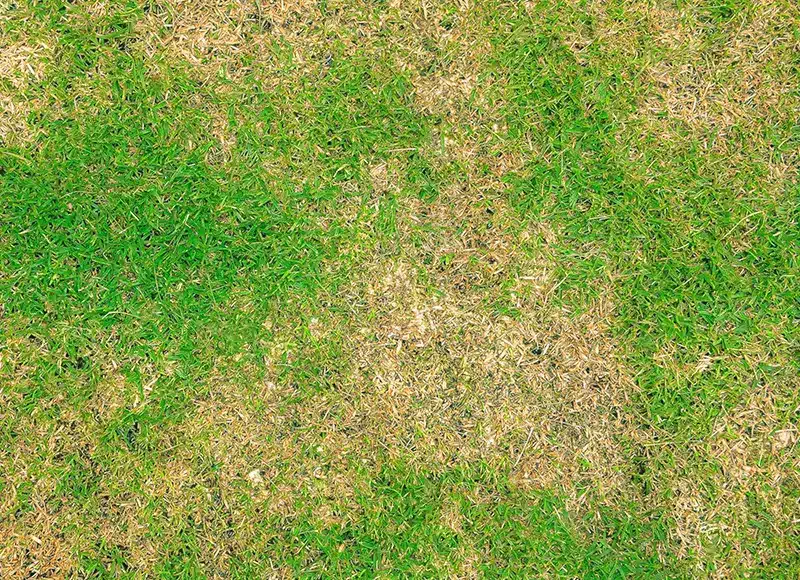
Identify the Cause Before You Repair the Spot
Not every bare spot should be treated the same way. For example, reseeding an area damaged by grubs without treating the infestation first is unlikely to produce lasting results. Taking a closer look at the affected area can help you choose the right solution and improve your chances of successful lawn restoration.
| Possible Cause | What You'll Notice | Recommended Solution |
| Pet urine | Yellow or brown spots with a green ring | Flush the soil, add fresh topsoil if needed, and reseed |
| Grub damage | Grass lifts easily like a carpet | Treat for grubs before repairing the lawn |
| Lawn disease | Irregular brown or thinning patches | Address the disease then reseed damaged areas |
| Compacted soil | Hard ground with little grass growth | Loosen or aerate the soil before adding seed |
If you're unsure what's causing the damage, it's worth identifying the problem before investing time and money into repairs. A professional lawn inspection can quickly determine whether insects, disease, soil conditions, or another issue is preventing healthy grass from growing, helping you avoid repeating the same repair season after season.
Step-by-Step: How to Restore Bare Spots in Your Lawn
Once you've identified and addressed the underlying cause, it's time to repair the damaged area. Following these steps will give new grass the best chance to establish and blend in with the rest of your lawn.
Step 1: Remove Dead Grass and Debris
Start by clearing away any dead grass, weeds, leaves, or other debris from the bare spot. Use a rake to remove loose material and expose the soil beneath. A clean surface helps grass seed make direct contact with the soil, which is essential for successful germination.
Step 2: Loosen the Soil
If the soil feels hard or compacted, loosen the top 1 to 2 inches with a garden rake or hand cultivator. Breaking up compacted soil improves airflow, water absorption, and root development, giving new grass a healthier environment to grow.
Step 3: Add Fresh Topsoil if Needed
If the area has poor soil or has eroded over time, spread a thin layer of quality topsoil over the loosened surface. Fresh topsoil helps retain moisture, provides nutrients, and creates an ideal seedbed for new grass.
Step 4: Apply Grass Seed Evenly
Choose a grass seed that's appropriate for your lawn and local growing conditions. Spread the seed evenly across the repaired area, then lightly rake it into the soil so it's covered by a thin layer of soil. This helps protect the seed while maintaining good soil contact.
Step 5: Water Consistently
Keep the repaired area consistently moist until the new grass becomes established. Light, frequent watering is generally more effective than heavy watering during the germination period. Once the grass begins growing, gradually transition to deeper, less frequent watering to encourage stronger root development.
Step 6: Stay Off the Area Until the Grass Establishes
Avoid walking, mowing, or placing heavy equipment on the repaired section until the new grass has had time to establish. Giving young grass time to develop strong roots will help it blend naturally with the rest of your lawn and improve the long-term success of your lawn patch repair.
Common Mistakes That Prevent Grass from Growing Back
Even when you follow the basic steps, a few common mistakes can keep new grass from filling in bare spots. Avoiding these issues can make the difference between a successful repair and having to start over.
- Skipping soil preparation: Grass seed needs good contact with loose, healthy soil. Spreading seed over compacted ground or dead grass greatly reduces germination.
- Ignoring the underlying problem: If grubs, lawn disease, poor drainage, or pet damage caused the bare spot, those issues should be addressed first. Otherwise, the new grass may fail for the same reason.
- Using the wrong grass seed: Not all grass varieties perform the same. Choose a seed that matches your existing lawn and is suited to your local climate and sun exposure.
- Watering too little—or too much: New grass needs consistent moisture to germinate. Allowing the soil to dry out or keeping it constantly saturated can both slow establishment.
- Mowing too soon: Wait until the new grass has reached a healthy mowing height before cutting it. Mowing too early can pull up young seedlings before they've developed strong roots.
- Expecting instant results: Grass takes time to establish. Continue watering and caring for the repaired area, even if growth seems slow during the first few weeks.
A little patience and proper lawn care go a long way. By avoiding these common mistakes, you'll give your new grass the best opportunity to grow into a thick, healthy lawn that blends seamlessly with the surrounding turf.
When Bare Spots Need Professional Attention
Some bare spots are easy to repair yourself, but others point to larger lawn health issues that require a more comprehensive solution. If patches continue to reappear or spread despite your efforts, it's time to take a closer look at what's happening beneath the surface.
You may benefit from professional lawn care if you notice:
- Bare spots returning in the same locations year after year
- Large sections of thinning or dead grass
- Signs of lawn disease or insect activity
- Compacted soil that prevents healthy growth
- Drainage problems causing overly wet or dry areas
- Poor overall lawn health despite regular watering and maintenance
A professional lawn evaluation can identify the root cause of the problem and recommend the right treatment plan. Depending on your lawn's needs, that may include lawn seeding and patch repair, fertilization, fungicide treatments, grub control, or other services designed to restore healthy, consistent growth.

Restore a Healthy, Beautiful Lawn with Marshall's Lawn Service
Bare spots don't have to become a permanent part of your lawn. Whether you're dealing with a few thin patches or widespread damage, addressing the underlying cause and using the right repair techniques can help your grass recover and thrive.
If you'd rather leave the work to the professionals, Marshall's Lawn Service is here to help. Our team provides expert lawn seeding and patch repair, fertilization, lawn disease treatments, and grub control to restore damaged areas and keep your lawn looking its best throughout the growing season.
Ready to bring your lawn back to life? Contact Marshall's Lawn Service today for a free estimate and let us help you achieve a thicker, healthier lawn.
Frequently Asked Questions About Lawn Bare Spots
How long does it take for grass to grow back in bare spots?
Most grass seed begins to germinate within one to three weeks, depending on the grass variety, soil temperature, and weather conditions. It may take several more weeks for the new grass to fully blend with the rest of your lawn.
Can I just throw grass seed on bare spots?
Simply spreading grass seed rarely produces the best results. Preparing the soil, improving seed-to-soil contact, and keeping the area properly watered significantly increase the chances of successful growth.
What causes bare spots in a lawn?
Bare spots can develop from pet damage, heavy foot traffic, lawn diseases, grub infestations, drought, compacted soil, poor drainage, or other environmental stressors.
When is the best time to repair bare spots in the lawn?
Early fall is often the ideal time to repair bare spots because cooler temperatures and consistent moisture encourage healthy root development. Spring is also a good time for many lawns, depending on your grass type and local climate.
Should I fertilize after repairing bare spots?
A lawn-safe starter fertilizer can help encourage healthy root development when used appropriately. Be sure to follow the product instructions or consult a lawn care professional to avoid overfertilizing newly seeded areas.
When should I call a lawn care professional?
If bare spots continue to return, spread across your lawn, or are caused by disease, grubs, drainage issues, or poor soil conditions, professional lawn care can help identify the problem and recommend a long-term solution.